By Dr. Pshtiwan Faraj | Kurdish Policy Analysis Despite massive spending by outside groups and high-profile endorsements for his opponent, Abdul El-Sayed secured a decisive Democratic Senate primary victory and now heads into a closely watched November showdown. Abdul El-Sayed has scored one of the most closely watched political upsets of the 2026 election cycle, defeating Representative Haley Stevens in Michigan's Democratic Senate primary despite facing more than $60 million in outside spending , much of it from pro-Israel political groups. The victory marks a significant breakthrough for the progressive wing of the Democratic Party and sets up a high-stakes general election contest against Republican Mike Rogers in November. El-Sayed's campaign prevailed even after Stevens received late endorsements from Michigan Governor Gretchen Whitmer and influential national Democrats, including Representative James Clyburn . Those endorsements failed to reverse momentum behind El-S...
Get link
Facebook
X
Pinterest
Email
Other Apps
Iraqi Militia Commander Charged in Alleged Plot Targeting Jewish Sites in U.S
Get link
Facebook
X
Pinterest
Email
Other Apps
U.S. prosecutors accuse Kataib Hezbollah commander of coordinating attacks linked to Iran conflict across Europe, Canada, and the United States
By Dr. Pshtiwan Faraj | Sulaimani, Iraq | 16 May 2026— Kurdish Policy Analysis
U.S. federal authorities have charged an Iraqi militia commander accused of plotting attacks against Jewish and American targets in the United States, including an alleged plan targeting a synagogue in New York City.
The New York Times reported on Friday that, according to a criminal complaint unsealed Friday in federal court in Manhattan, Mohammad Baqer Saad Dawood Al-Saadi is accused of directing and encouraging attacks against U.S. and Israeli interests following the outbreak of the U.S.-Israeli war with Iran.
Federal prosecutors allege Al-Saadi is a senior commander within Kataib Hezbollah, the Iran-backed Iraqi militia closely linked to Iran’s Islamic Revolutionary Guard Corps and long accused of attacks against American military forces and diplomatic targets across the Middle East.
According to the complaint and reporting by The New York Times, investigators accuse Al-Saadi of discussing possible attacks on synagogues in New York City and encouraging operations targeting Americans and Jews in the United States, Canada, and Europe.
Prosecutors allege the activities were part of broader retaliation efforts linked to U.S. and Israeli military operations against Iran and escalating regional tensions involving Iran-backed armed groups.
The complaint accuses Al-Saadi of involvement in at least 18 attacks in Europe and additional operations in Canada since late February. Prosecutors say the alleged attacks included firebombing a Bank of New York Mellon building in Amsterdam, attempted bomb attacks in Paris, stabbings targeting Jewish individuals in London, an attack on a synagogue in Canada, and a shooting incident near the U.S. consulate in Toronto.
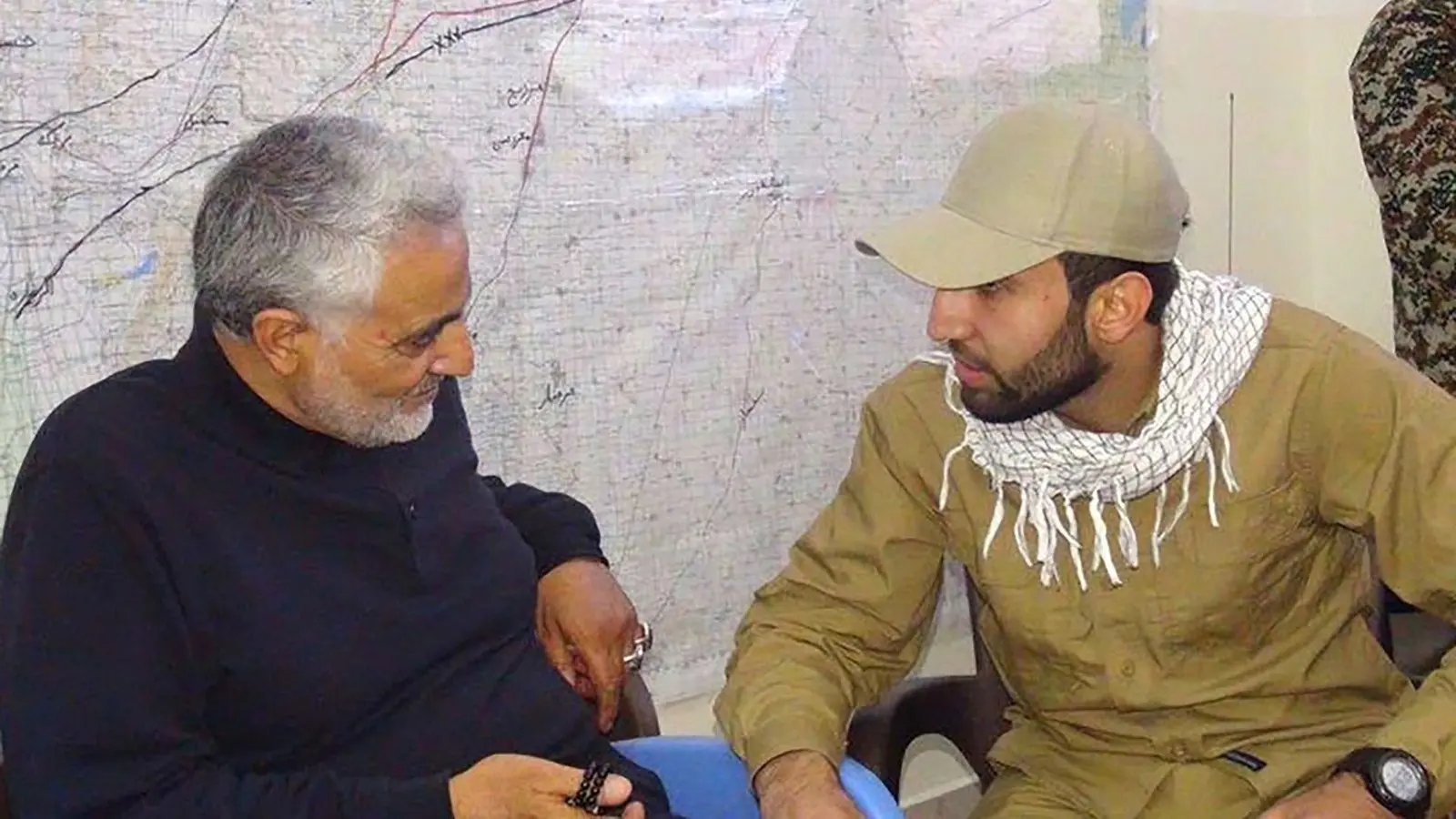
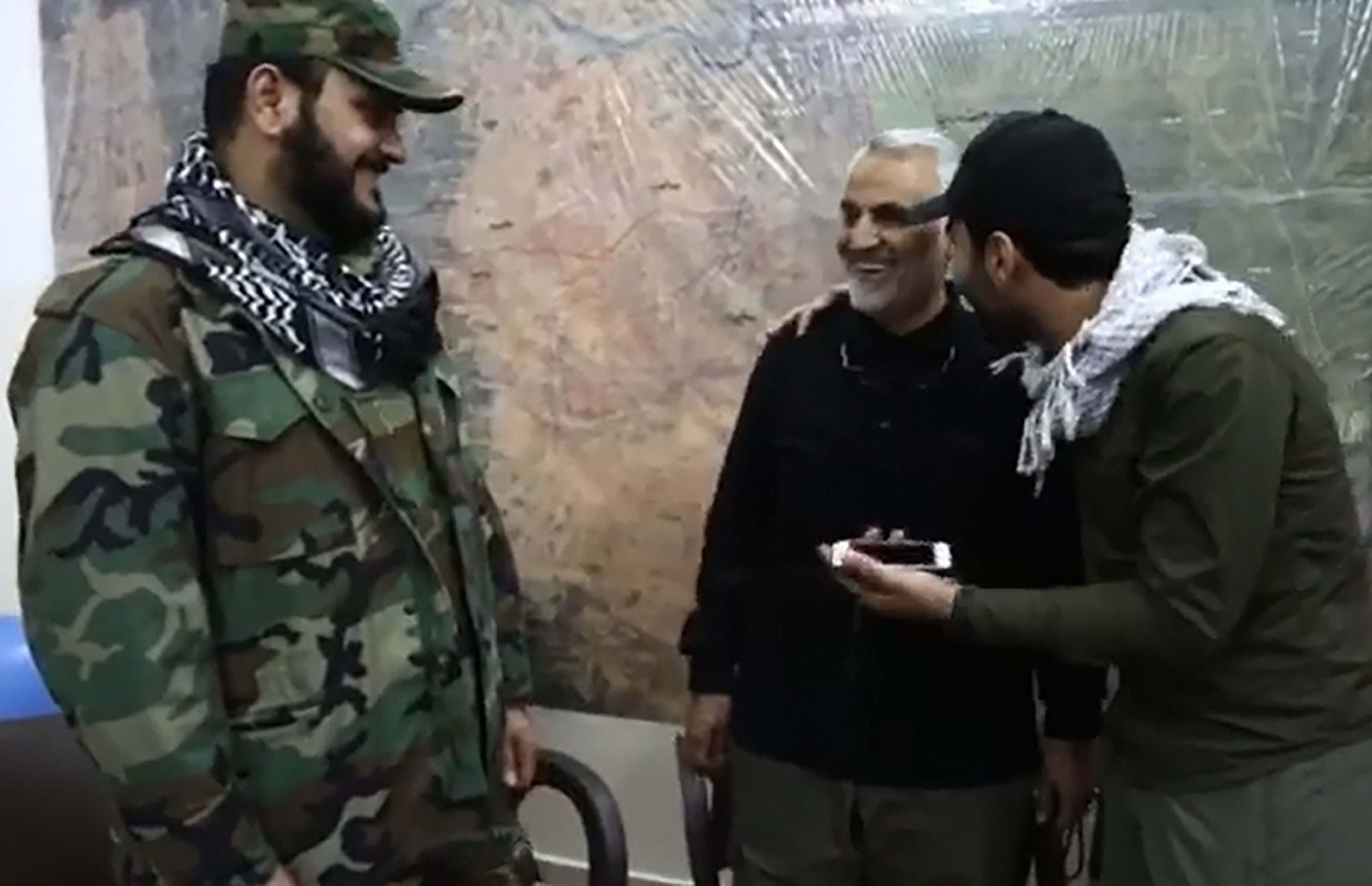
Mohammed Baqer Saad Dawood al-Saadi (right), pictured here with late Iranian Gen. Qasem Soleimani. (Photo: DOJ)
According to prosecutors, Al-Saadi also discussed plans targeting Jewish institutions in New York City, Los Angeles, and Scottsdale, Arizona. Investigators allege he provided maps and photographs of Jewish centers to an undercover law enforcement officer and pledged financial support for a planned attack on a synagogue in New York.
The New York Times reported that federal investigators monitored communications connected to the alleged plots and that U.S. authorities increasingly view the case as part of broader concerns surrounding Iran-linked proxy networks potentially targeting Jewish or Israeli-linked sites abroad.
The report described the case as one of the most serious alleged Iran-linked external attack plots inside the United States in recent years.
Mohammad Baqer Saad Dawood al-Saadi (R) is pictured with the late Iranian Gen. Qasem Soleimani (C). (Photo: Dept. of Justice)
Federal prosecutors charged Al-Saadi with conspiracy to provide material support to terrorism, conspiracy to bomb public places, and supporting designated foreign terrorist organizations.
The complaint further states that Al-Saadi had ties to former Iranian Quds Force commander Qassem Soleimani, who was killed in a U.S. drone strike in Baghdad in January 2020.
During an initial court appearance Friday, Al-Saadi reportedly described himself as a “political prisoner” and a “prisoner of war.” According to his lawyer, he was arrested in Türkiye before being transferred to U.S. custody, though American authorities have not publicly disclosed further operational details.
Neither the Iraqi government nor Kataib Hezbollah had immediately commented on the charges.
The case comes amid heightened international security concerns tied to the expanding regional fallout from the Iran conflict and growing fears of retaliatory attacks targeting Western and Jewish institutions worldwide.
The Alleged Network
US authorities say al-Saadi worked through covert networks and intermediaries to organize attacks ranging from arson and bomb plots to stabbings and shootings. Prosecutors claim he attempted to recruit operatives through encrypted communications and even unknowingly communicated with undercover law enforcement agents posing as criminal facilitators.
Investigators allege he offered cryptocurrency payments for attacks on Jewish targets inside the United States, including a planned strike on a synagogue in New York.
The suspect was reportedly detained in Turkey before being transferred into US custody and appearing in federal court in New York, where prosecutors requested his continued detention pending trial.
The Iran Proxy Question
The case is likely to intensify scrutiny of Iran-linked militia networks operating beyond the Middle East.
Kataib Hezbollah, one of Iraq’s most powerful Iran-aligned armed factions, has long been accused by Washington of coordinating with the IRGC’s Quds Force and participating in regional proxy operations.
US prosecutors and intelligence officials increasingly argue that Iranian-linked operations are evolving beyond traditional regional conflict into decentralized hybrid warfare involving cyber operations, criminal recruitment networks, covert cells, and international intimidation campaigns.
Some reports also link the suspect to a shadowy organization known as Harakat Ashab al-Yamin al-Islamia (HAYI), a little-known pro-Iranian group that has claimed attacks against Jewish targets in Europe since early 2026.
Why This Matters
The allegations arrive during one of the most dangerous periods in US-Iran relations in years.
Since the escalation of conflict between Washington, Israel, and Iran-backed militias earlier in 2026, fears have grown that proxy warfare could increasingly spill into Western cities far beyond the Middle East.
Security analysts warn that modern proxy conflict is no longer geographically contained.
Instead of conventional battlefields alone, rival states increasingly rely on covert influence operations, sabotage networks, lone actors, deniable militias, and transnational intimidation campaigns.
If proven in court, the case against al-Saadi would represent one of the clearest examples yet of alleged coordination between Middle Eastern militia structures and international terror operations targeting civilians abroad.
The Broader Strategic Implication
The case also exposes the growing overlap between regional militia warfare and global security threats.
For years, Western governments largely viewed Iraqi militias through the lens of Iraq’s internal politics and regional confrontation with US forces.
But this investigation suggests some networks may now possess international operational ambitions extending into Europe and North America.
That shift could fundamentally alter how Western governments approach Iran-linked armed groups in Iraq and the broader “Axis of Resistance.”
Conclusion
The arrest of Mohammad Baqer Saad Dawood al-Saadi may become more than a criminal prosecution.
It could mark a turning point in how the United States and its allies define the global reach of Iran-linked militia networks.
The most alarming aspect of the allegations is not simply the planned attacks themselves.
It is the emerging reality that Middle Eastern proxy warfare may no longer remain confined to the Middle East.
By Dr. Pshtiwan Faraj | Kurdish Policy Analysis The sudden death of one of Washington's most influential Republican hawks removes a powerful congressional advocate for Ukraine, Israel, a hardline Iran policy, and Kurdish aspirations in the Middle East. The death of Senator Lindsey Graham removes one of Washington's strongest advocates for the Kurds, Ukraine, Israel, and a tougher US policy toward Iran. Lindsey Graham's Sudden Death Leaves a Strategic Void in Washington WASHINGTON — Senator Lindsey Graham , one of the Republican Party's most influential foreign policy voices and one of President Donald Trump's closest congressional allies, has died at the age of 71 following a sudden illness, according to a statement released by his office. His unexpected death comes at a particularly volatile moment in American and Middle Eastern politics. Graham had recently traveled to Ukraine, remained deeply involved in congressional debates over Iran and Israel, and was p...
By Dr. Pshtiwan Faraj | Kurdish Policy Analysis The passing of Senator Lindsey Graham removes one of the most influential American advocates for the Kurdish people, raising questions about the future of bipartisan support for Kurdistan amid shifting US foreign policy priorities. The death of Senator Lindsey Graham removes one of Washington's strongest advocates for the Kurdish people, creating uncertainty for future US-Kurdish relations. The Loss of a Longstanding Friend of Kurdistan The sudden death of U.S. Senator Lindsey Graham has prompted an outpouring of tributes not only across Washington but throughout the Kurdistan Region, reflecting the rare position he occupied as one of the most consistent and influential American advocates for Kurdish interests. The Washington Kurdish Institute described Graham as a steadfast supporter whose commitment to the Kurdish people extended beyond political rhetoric, offering condolences to his family while highlighting...
By Dr. Pshtiwan Faraj A new geopolitical analysis argues that Kurdistan's experience of survival, mediation, and pragmatic diplomacy offers unexpected lessons as the international order faces its deepest crisis since World War II. A new geopolitical analysis argues Kurdistan's experience offers vital lessons for rebuilding international order amid the Iran war and global instability. As the World Fragments, Kurdistan Offers an Unexpected Lesson The international system is under unprecedented strain. Russia's war in Ukraine, escalating tensions between Iran and the West, the paralysis of the United Nations, and growing competition among major powers have raised a fundamental question: Who still defines the rules of international order? According to a new geopolitical analysis by Greg Mills and Basil Gavalas , the answer may not come from Washington, Moscow, Beijing, or Brussels—but from an unlikely place: Iraq's Kurdistan Region . While lacking international r...




Comments
Post a Comment